Chronic obstructive pulmonary disease (COPD) is a long-term lung condition that narrows the airways and damages the air sacs, making it harder to breathe. It is one of the leading causes of illness and death worldwide, but treatment can greatly improve quality of life.
Main Causes
- Smoking tobacco, the most common cause
- Long-term exposure to indoor smoke from cooking with wood or coal
- Workplace dust, fumes and chemicals
- Air pollution
- Rare genetic conditions such as alpha-1 antitrypsin deficiency
Common Symptoms
- Shortness of breath, especially during activity
- Long-lasting cough, often with mucus
- Wheezing and chest tightness
- Frequent chest infections
Diagnosis
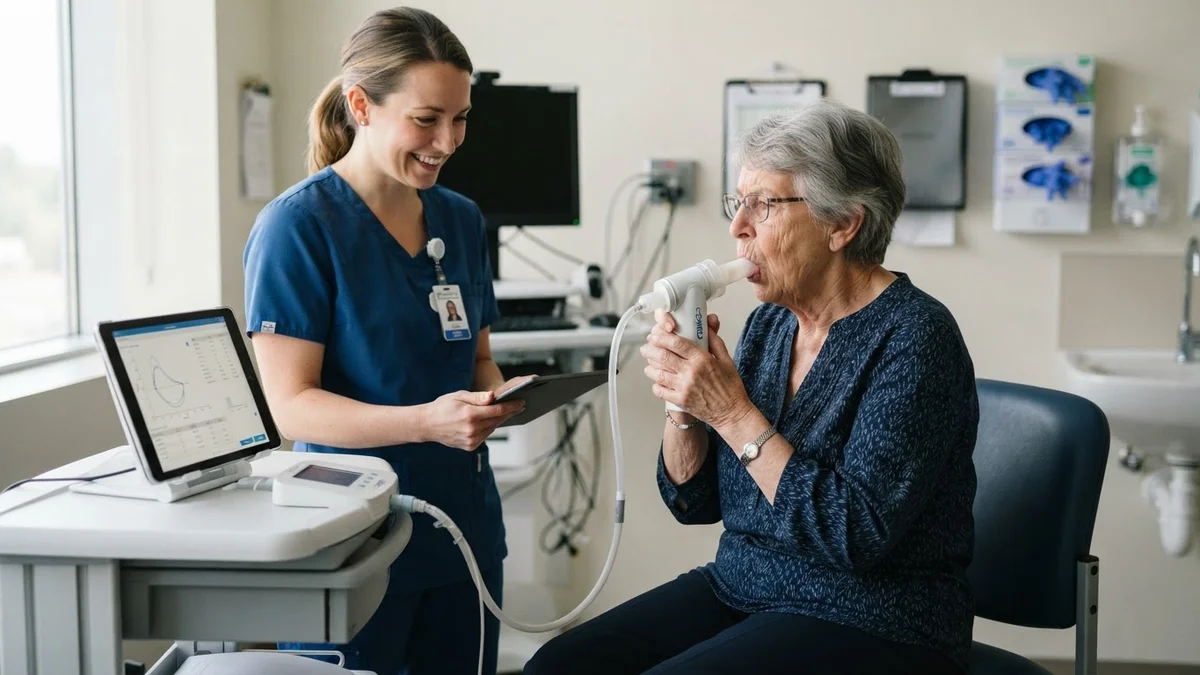
Spirometry is the key breathing test. It measures how much air you can blow out and how fast. Chest X-rays and blood tests may also be used.
Treatment and Management
| Approach | Benefit |
|---|---|
| Stopping smoking | The most important step to slow progression |
| Inhalers | Open airways and reduce flare-ups |
| Pulmonary rehabilitation | Exercise and education to improve breathing and fitness |
| Vaccinations | Flu and pneumococcal vaccines reduce infections |
| Oxygen therapy | For people with low blood oxygen |
Flare-Ups
A flare-up is a sudden worsening of symptoms, often triggered by infections. Having an action plan from your doctor helps you respond early.
When to Seek Urgent Help
Seek emergency care for severe breathlessness, blue lips, confusion, or chest pain.
Conclusion
COPD cannot be cured, but stopping smoking, using treatments correctly and staying active help people breathe easier and live better.
Disclaimer: This article is for general information only and is not a substitute for professional medical advice, diagnosis or treatment. Always consult a qualified healthcare provider about your own situation. In an emergency, call your local emergency number.