Varicose veins are enlarged, twisted veins that are often blue or purple and usually appear on the legs. They develop when small valves inside the veins weaken, allowing blood to pool. They are very common, especially with age, and are often more of a cosmetic concern, though they can cause discomfort.
Common Symptoms
- Visible bulging, twisted veins
- Aching, heavy or tired legs
- Swelling around the ankles
- Itching around the veins
- Cramps, especially at night
Risk Factors
| Factor | Why it matters |
|---|---|
| Age | Vein valves weaken over time |
| Female sex and pregnancy | Hormones and increased blood volume |
| Family history | Inherited vein weakness |
| Long periods of standing | Increased pressure in leg veins |
| Excess weight | More pressure on veins |
Self-Care Tips
- Walk regularly to help blood flow.
- Raise your legs when resting.
- Avoid standing or sitting still for long periods.
- Wear compression stockings if advised by a doctor.
- Maintain a healthy weight.
Medical Treatments
- Sclerotherapy: injections that close small veins
- Endovenous laser or radiofrequency treatment
- Surgical removal for larger veins in some cases
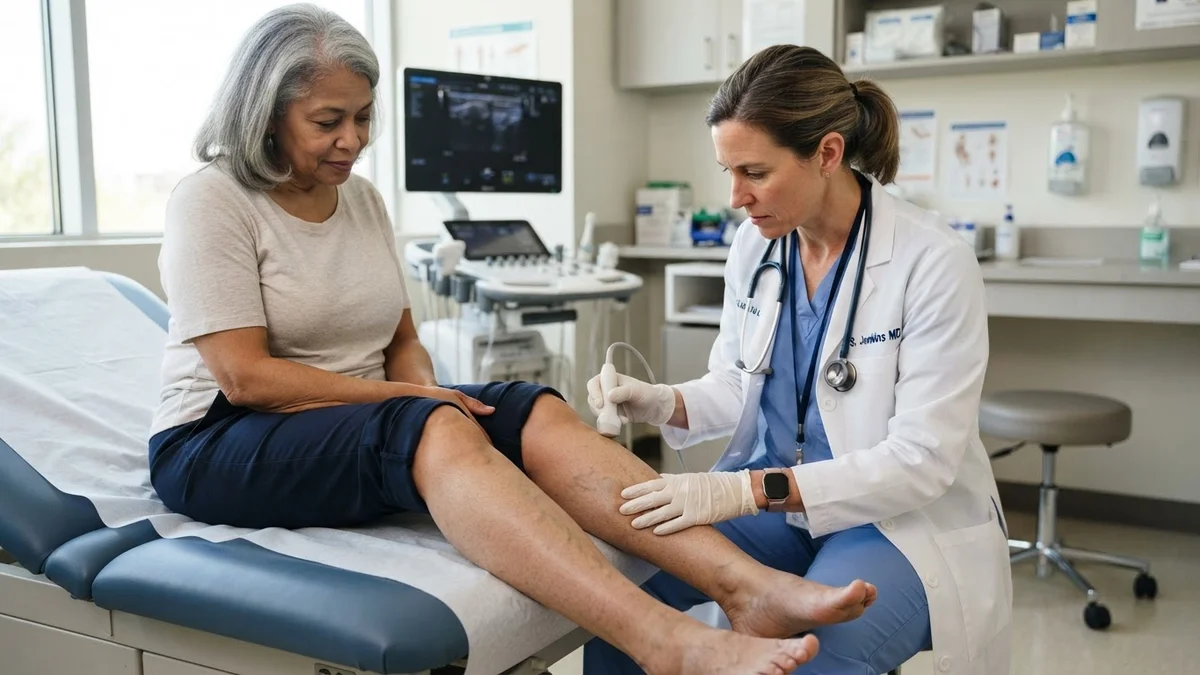
A vascular specialist usually performs an ultrasound to assess the veins before treatment.
When to See a Doctor
Seek medical care for painful, red, warm or hard veins, skin changes or ulcers near the ankle, or bleeding from a vein. Sudden leg swelling with pain may be a blood clot and needs urgent care.
Conclusion
Varicose veins are common and usually harmless, but symptoms and complications can be treated effectively. Healthy habits help reduce discomfort.
Disclaimer: This article is for general information only and is not a substitute for professional medical advice, diagnosis or treatment. Always consult a qualified healthcare provider about your own situation. In an emergency, call your local emergency number.