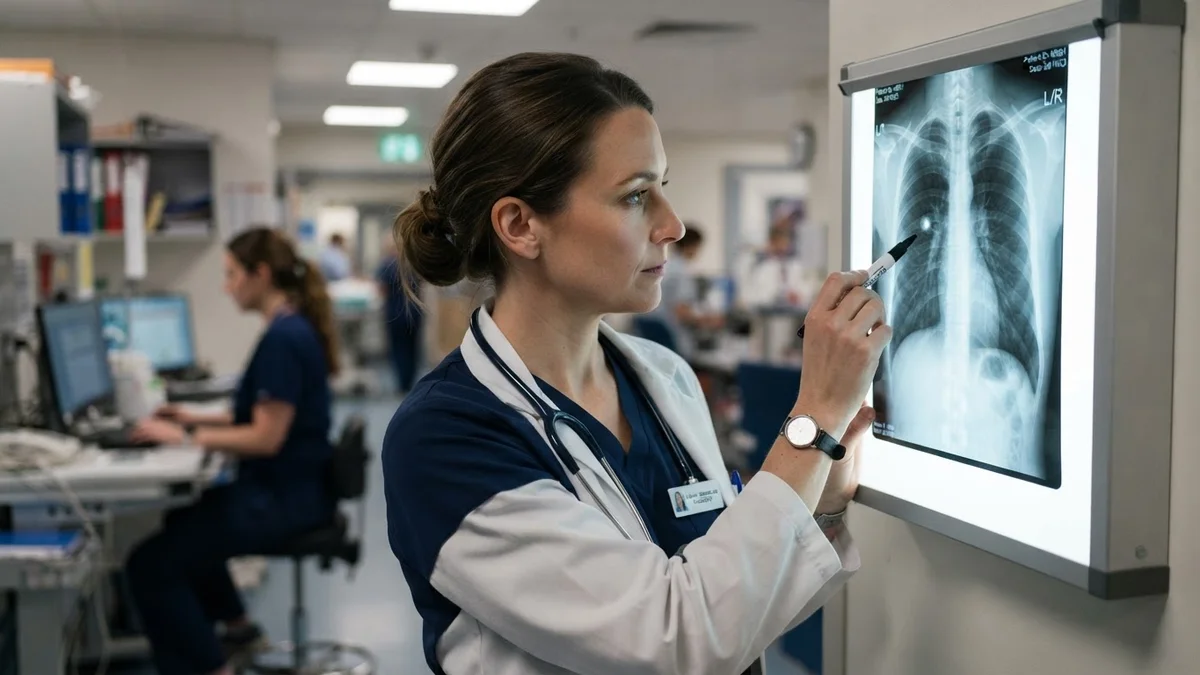
Pneumonia is an infection that inflames the air sacs in one or both lungs. The air sacs may fill with fluid or pus, causing cough, fever and difficulty breathing. Pneumonia can affect anyone but is most serious for young children, older adults and people with other health problems.
Common Causes
- Bacteria, such as Streptococcus pneumoniae
- Viruses, including influenza and COVID-19
- Fungi, mainly in people with weakened immunity
Symptoms
- Cough, often with yellow or green mucus
- Fever, sweating and chills
- Shortness of breath and rapid breathing
- Chest pain when breathing or coughing
- Tiredness and loss of appetite
- Confusion, especially in older adults
Diagnosis
Doctors listen to the lungs and may order a chest X-ray, blood tests, oxygen level checks and sputum tests.
Treatment
| Severity | Typical care |
|---|---|
| Mild | Treatment at home with rest, fluids and antibiotics if bacterial |
| Moderate to severe | Hospital care with oxygen, IV fluids and IV antibiotics |
| Very severe | Intensive care and breathing support |
Who Is at Higher Risk?
- Children under 5 and adults over 65
- Smokers
- People with chronic heart, lung or kidney disease or diabetes
- People with weakened immune systems
Prevention
Vaccines against pneumococcus, influenza and other infections, not smoking, good hand hygiene and managing chronic conditions reduce risk.
When to Seek Urgent Care
Seek emergency help for difficulty breathing, bluish lips, chest pain, confusion or high fever that does not improve.
Conclusion
Pneumonia is serious but treatable. Early diagnosis and treatment greatly improve recovery.
Disclaimer: This article is for general information only and is not a substitute for professional medical advice, diagnosis or treatment. Always consult a qualified healthcare provider about your own situation. In an emergency, call your local emergency number.