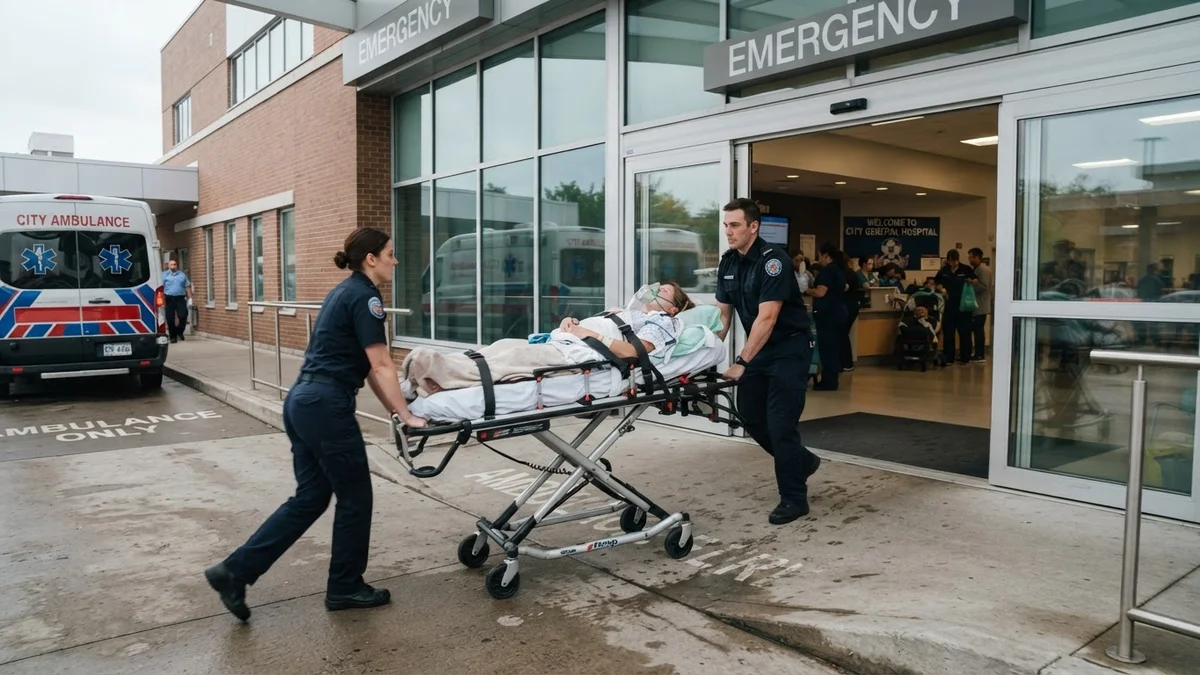
Chest pain is one of the most common reasons people visit emergency departments. While many causes are not dangerous, chest pain can signal a heart attack or other life-threatening condition. Knowing when to act quickly can save a life.
Call Emergency Services Immediately If
- Pressure, squeezing or heaviness in the chest lasting more than a few minutes
- Pain spreading to the arm, neck, jaw, back or stomach
- Shortness of breath, sweating, nausea or light-headedness
- Sudden sharp chest pain with breathlessness
- Chest pain with fainting or a very fast or irregular heartbeat
Do not drive yourself to hospital if you suspect a heart attack.
Possible Causes of Chest Pain
| System | Examples |
|---|---|
| Heart | Heart attack, angina, inflammation around the heart |
| Lungs | Blood clot in the lung, pneumonia, collapsed lung |
| Digestive | Acid reflux, gallbladder problems |
| Muscles and bones | Muscle strain, rib injury, inflamed rib cartilage |
| Other | Anxiety and panic attacks |
What Happens in Hospital
- Quick assessment of breathing, pulse and blood pressure
- An ECG within minutes of arrival
- Blood tests such as troponin to check for heart muscle damage
- Chest X-ray or other scans if needed
- Treatment based on the cause
Higher-Risk Groups
People with diabetes, high blood pressure, high cholesterol, smoking history, older age or family history of heart disease should take chest pain especially seriously. Women and people with diabetes may have less typical symptoms.
Conclusion
Never ignore chest pain. If in doubt, call emergency services. Fast treatment saves heart muscle and lives.
Disclaimer: This article is for general information only and is not a substitute for professional medical advice, diagnosis or treatment. Always consult a qualified healthcare provider about your own situation. In an emergency, call your local emergency number.