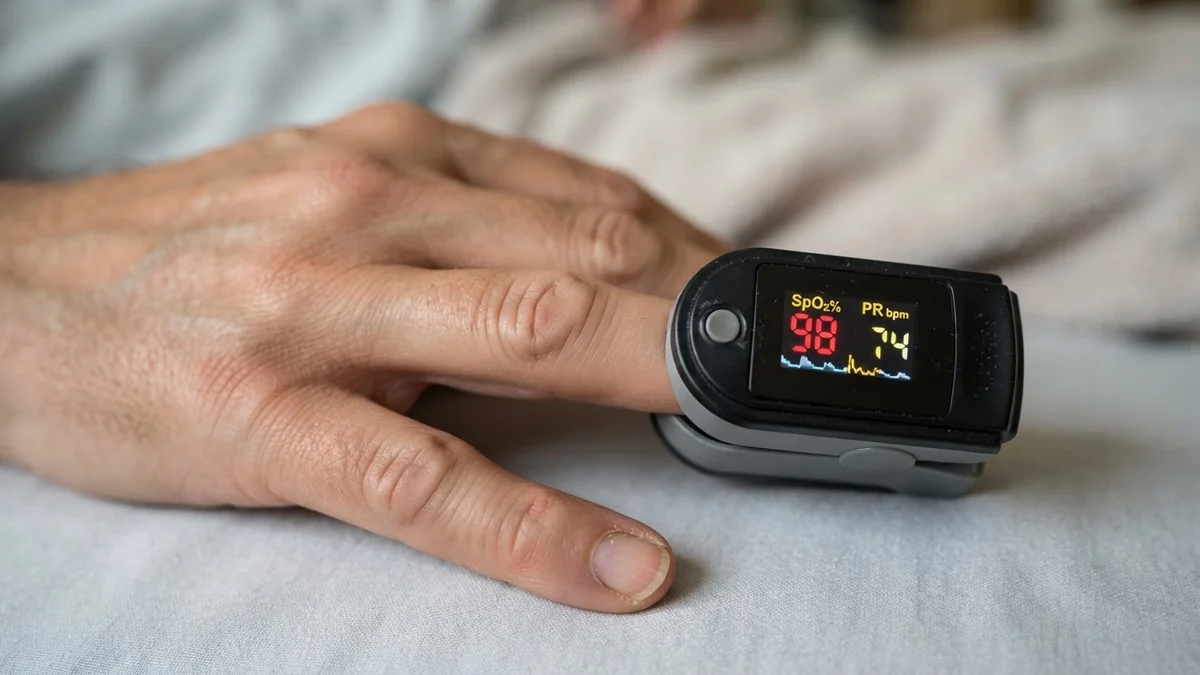
A pulse oximeter is a small device that clips onto a finger and estimates how much oxygen is carried in your blood (SpO2). It is widely used in hospitals and at home, especially for people with lung or heart conditions.
Understanding Readings
| SpO2 reading | General meaning for most healthy adults |
|---|---|
| 95–100% | Normal |
| 92–94% | Lower than usual; contact a healthcare provider for advice |
| Below 92% | Low; seek medical help promptly |
| Below 88–90% | Seek urgent medical care, especially with symptoms |
People with chronic lung disease may have different target ranges set by their doctor.
How to Get an Accurate Reading
- Rest for a few minutes before measuring.
- Warm your hands; cold fingers can give low readings.
- Remove nail polish or artificial nails.
- Keep your hand still and at heart level.
- Wait until the number stabilises, about 30–60 seconds.
Factors That Affect Accuracy
- Poor circulation or cold hands
- Movement or shivering
- Bright light on the sensor
- Very dark nail polish
- Some studies show readings can be less accurate on darker skin, so symptoms matter too
Do Not Rely on Numbers Alone
Seek urgent help if you have severe breathlessness, chest pain, confusion, bluish lips or difficulty speaking, even if the reading seems normal.
Conclusion
Pulse oximeters are useful tools when used correctly. Combine readings with how you feel, and follow your doctor’s guidance on target levels.
Disclaimer: This article is for general information only and is not a substitute for professional medical advice, diagnosis or treatment. Always consult a qualified healthcare provider about your own situation. In an emergency, call your local emergency number.